Cat hissing can sound scary, that sharp, snake-like exhale paired with an arched back and flattened ears is unmistakable. But what does a hissing cat actually mean? Far from being a sign of a “bad” cat, hissing is a sophisticated form of feline communication. At Glenwood Pet Hospital, we’ll help you understand why cats hiss, what triggers it, and how to respond appropriately to help improve your relationship with your cat and keep everyone safe.
What Is Cat Hissing?
A hiss is a defensive vocalization produced when a cat forces air through its open mouth over the tongue. The resulting sound closely resembles the hiss of a snake, and that’s likely not a coincidence. Many animal behaviorists believe cats may have evolved the hiss as a form of snake mimicry, a way to make themselves seem more dangerous than they are. Cat hissing is almost always a defensive behavior rather than an aggressive one. It means: “Back off. I feel threatened.”
What Does a Hissing Cat Look Like?
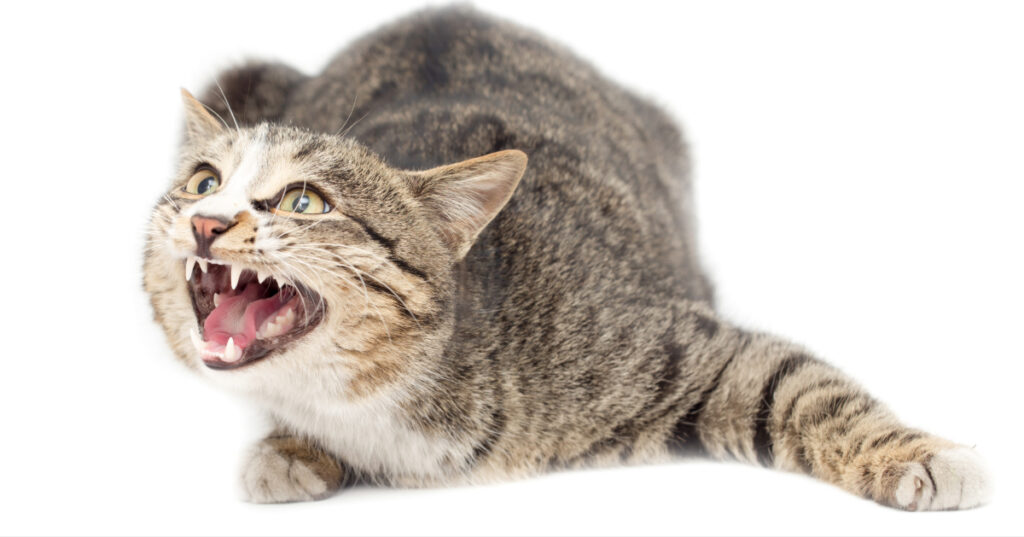
Cat hissing rarely happens in isolation. When a cat hisses, you’ll typically see the full defensive body language package: an arched back, puffed-up fur, flattened ears, dilated pupils, a lowered tail or lashing tail, and an open mouth with the teeth exposed. This is your cat communicating at maximum volume: they are frightened or uncomfortable and they want the threat to go away.
Is Cat Hissing Normal?
Yes, hissing is a completely normal part of cat communication. All cats are capable of hissing, and most will hiss at some point in their lives given the right circumstances. A cat that hisses occasionally in response to a real stressor is behaving normally. A cat that hisses constantly, unpredictably, or in situations where there’s no apparent trigger may have an underlying issue including pain or illness that warrants a veterinary evaluation.
Why Do Cats Hiss? Common Triggers
Cat hissing is triggered by fear, perceived threat, overstimulation, pain, or territorial conflict.
Fear and Feeling Threatened
Fear is the number one reason cats hiss. An unfamiliar person, a new pet, a sudden loud noise, or an unexpected approach can all trigger a fear-based hiss. In these situations, the cat is not being aggressive. They’re terrified and asking for space. Forcing interaction with a fearful cat who is hissing can escalate the situation and result in a scratch or bite.
New Pets or Animals in the Home
Introducing a new cat or dog into a household with a resident cat is one of the most common reasons cat hissing occurs. Cats are territorial animals with a strong sense of their home range. A new animal represents an intrusion, and hissing is a natural first response. Slow, supervised introductions are key to helping cats in multi-pet households eventually coexist peacefully.
Overstimulation
Even the most affectionate cat has a petting limit. Overstimulation (sometimes called “petting-induced aggression”) happens when a cat becomes overwhelmed by physical contact. You may notice your cat’s tail lashing, skin twitching, or ears rotating backward before the hiss. These are signals that your cat is reaching their tolerance threshold. Stopping before the hiss keeps both of you comfortable.
Pain or Illness
A cat that suddenly starts hissing when touched or handled in a specific area may be experiencing pain. Arthritis, dental disease, ear infections, injuries, and internal conditions can all make a normally gentle cat react defensively to touch. If your cat’s hissing is new, increasing, or associated with being touched near a particular body part, a veterinary exam at Glenwood Pet Hospital is an important next step.
Maternal Instinct
A mother cat with kittens will hiss at anything she perceives as a threat to her young. This is primal, protective behavior. Even a normally social cat may become defensive around her litter. Giving the mother and kittens a quiet, private space and limiting handling in the early weeks can help reduce stress-related hissing.
Redirected Aggression
Redirected aggression occurs when a cat becomes aroused by something they can’t access like an outdoor cat through a window and then redirects that frustration onto the nearest person or animal. The result is often a sudden, seemingly unprovoked hiss or swipe. This can be particularly confusing because the cat may have been calm just moments before.
How to Respond When Your Cat Hisses
How you respond to a hissing cat matters. The wrong reaction can escalate the situation or damage your relationship. The right response helps the cat feel safe and defuses tension.
When your cat hisses, follow these general guidelines:
- Stop whatever you’re doing immediately including movement, petting, or approaching
- Give the cat space and do not attempt to comfort or pick them up
- Avoid direct eye contact, which cats read as confrontational
- Speak calmly and quietly if you say anything at all
- Allow the cat to retreat to a safe space if they choose
- Do not punish hissing as it removes the warning signal and can lead to biting without warning
When Cat Hissing Means a Vet Visit Is Needed
Most cat hissing is behavioral and entirely normal, but some hissing patterns are signals that your cat needs medical attention. Contact Glenwood Pet Hospital in Erie, PA if:
- Your cat has started hissing suddenly with no clear behavioral trigger
- Hissing occurs when you touch a specific area of the body
- Your cat seems lethargic, is eating less, or is hiding more than usual alongside the hissing
- The hissing is accompanied by aggression that has led to injury
- A previously social cat has become reclusive and hissing frequently
Building a Better Bond With Your Hissing Cat
A hiss is communication, not a character flaw and responding with patience and respect builds far more trust than punishment ever could. If your cat is hissing more than seems normal, or if you’re concerned that something physical might be driving the behavior, reach out to our team at Glenwood Pet Hospital in Erie, Pennsylvania. Call (814) 864-3019 or book an appointment online. We’re here to help you and your cat live together more comfortably and that starts with understanding what your cat is trying to say.