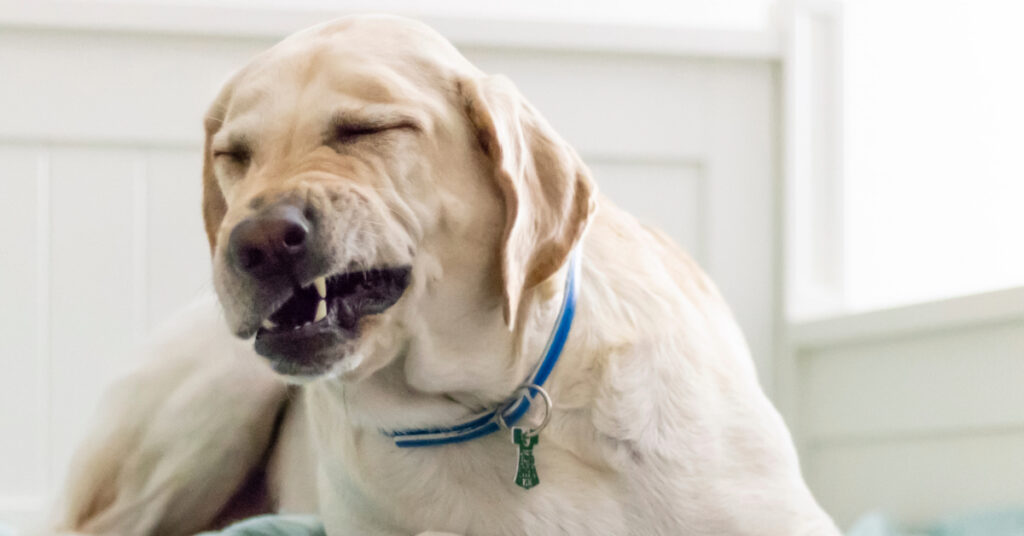
Dog sneezing is exactly what it sounds like: a sudden, forceful expulsion of air through the nose that your dog has little control over. It’s a natural reflex, but when it happens repeatedly or comes with other symptoms, it can be a sign that something more is going on. From a blade of grass stuck in the nasal passage to seasonal allergies to dental disease you’d never suspect, the reasons behind a sneezing dog are more varied than most pet owners realize. Read on to find out what’s most likely behind your dog’s sneezes, which symptoms should have you reaching for the phone, and exactly when it’s time to bring your pup in to see us at Glenwood Pet Hospital in Erie, Pennsylvania.
Why Is My Dog Sneezing?
A dog sneezing once or twice throughout the day is generally nothing to worry about. Dogs sneeze for many of the same reasons people do: to clear an irritant from the nasal passage, respond to an allergen, or simply because something tickled their nose. That said, frequent sneezing in dogs, especially when paired with other symptoms, deserves a closer look.
What Is Normal Dog Sneezing?
An occasional sneeze is a normal, healthy reflex. Dogs sneeze to expel dust, debris, or foreign material from their nasal passages. Reverse sneezing, which is a rapid, repetitive inhalation that sounds alarming but is usually harmless, is also common in dogs, particularly small breeds.
When Should Dog Sneezing Concern You?
You should pay closer attention when your dog is sneezing frequently, sneezing with discharge, or showing other signs of illness alongside the sneezing. Bloody discharge, pawing at the nose, loss of appetite, or lethargy paired with sneezing are all reasons to schedule a veterinary appointment.
The 6 Most Common Reasons Dogs Sneeze
From seasonal allergies to foreign objects, the causes of sneezing in dogs vary widely. Here’s a look at what’s most likely behind your pup’s sneezes.
1. Nasal Irritants and Environmental Triggers
One of the most common causes of dog sneezing is simple environmental irritation. Dust, pollen, perfume, cigarette smoke, cleaning products, and even candles can irritate your dog’s sensitive nasal passages and trigger a sneezing episode. If your dog tends to sneeze after you clean the house or when spending time outdoors, environmental irritants may be the culprit.
2. Seasonal or Environmental Allergies
Dogs can develop allergies just like people can, and those allergies often show up as sneezing. Seasonal dog sneezing is commonly linked to pollen, mold, grass, and other outdoor allergens. Year-round indoor allergies to dust mites, mold, or pet dander can also cause chronic sneezing in dogs. Allergic dogs may also scratch, lick their paws, or have watery eyes alongside sneezing.
3. A Foreign Object in the Nose
Dogs are curious by nature and love to sniff everything they encounter. That curiosity can occasionally result in a grass seed, plant material, or tiny piece of debris getting lodged in the nasal passage. A dog sneezing repeatedly and forcefully, especially if it’s sudden and your dog is pawing at its nose, may have something stuck up there. This requires prompt veterinary attention.
4. Upper Respiratory Infection
Upper respiratory infections are a well-known cause of sneezing in dogs, particularly those who spend time in boarding facilities, dog parks, or shelters. Bacterial and viral infections can inflame the nasal passages and cause sneezing, nasal discharge, and coughing. Dogs with respiratory infections may also seem lethargic or lose interest in food. Our team at Glenwood Pet Hospital can diagnose the infection and provide appropriate treatment.
5. Dental Disease
This one surprises many pet owners: dental disease, particularly tooth root infections in the upper teeth, can cause sneezing in dogs. The roots of the upper premolars and molars sit very close to the nasal cavity. When infection or inflammation affects those roots, it can irritate the nasal passage and lead to sneezing and nasal discharge. If your dog is sneezing and also showing signs of mouth pain, bad breath, or difficulty eating, a dental exam may be in order.
6. Nasal Tumors or Polyps
While less common, nasal polyps and nasal tumors can be the reason behind persistent, unexplained dog sneezing, particularly in older dogs. These growths can partially obstruct the nasal passage and cause sneezing, nosebleeds, facial swelling, or discharge from one nostril. Any of these signs warrant a veterinary evaluation as soon as possible.
Other Reasons Your Dog May Sneeze
Beyond the six most common causes, there are a few other reasons dogs sneeze that are worth knowing about.
Play Sneezing
Did you know that dogs sometimes sneeze during play? Play sneezing is generally a positive signal as dogs use it to communicate that they’re having fun and that their play behavior is lighthearted rather than aggressive. If your dog sneezes while romping around with you or another pet, there’s usually nothing to worry about.
Breed-Specific Sneezing
Brachycephalic breeds, which are flat-faced dogs like Bulldogs, Pugs, and French Bulldogs, are more prone to sneezing due to the structure of their nasal passages. Their shorter snouts mean less room for airflow, which can make them sneeze more frequently than long-snouted breeds.
Signs That Your Dog’s Sneezing Needs Veterinary Attention
Not every sneeze calls for a trip to the vet, but these are the signs that indicate it’s time to seek professional care. Contact Glenwood Pet Hospital in Erie, PA if your dog shows any of the following:
- Frequent or persistent sneezing that lasts more than a day or two
- Bloody or colored nasal discharge alongside sneezing
- Sneezing accompanied by pawing at the face or nose
- Loss of appetite, lethargy, or fever in addition to sneezing
- Nosebleeds, facial swelling, or discharge from only one nostril
What to Expect at Your Dog’s Appointment
When you bring your dog in for sneezing, your veterinarian will take a thorough history and perform a physical exam. Depending on what they find, they may recommend diagnostic testing such as imaging, a nasal scope, or a culture to pinpoint the cause. The sooner a diagnosis is made, the sooner your dog can get relief.
Your Dog Deserves Answers, Not Just Guesses
Dog sneezing can stem from something as simple as a dusty house or as complex as a nasal tumor. Luckily, most causes of sneezing in dogs are treatable when caught early. If your pup has been sneezing more than usual, don’t wait it out and hope for the best. Our team at Glenwood Pet Hospital in Erie, Pennsylvania is here to help you get to the bottom of it. Call us today at (814) 864-3019 or book an appointment online, and get your dog the care they deserve.